


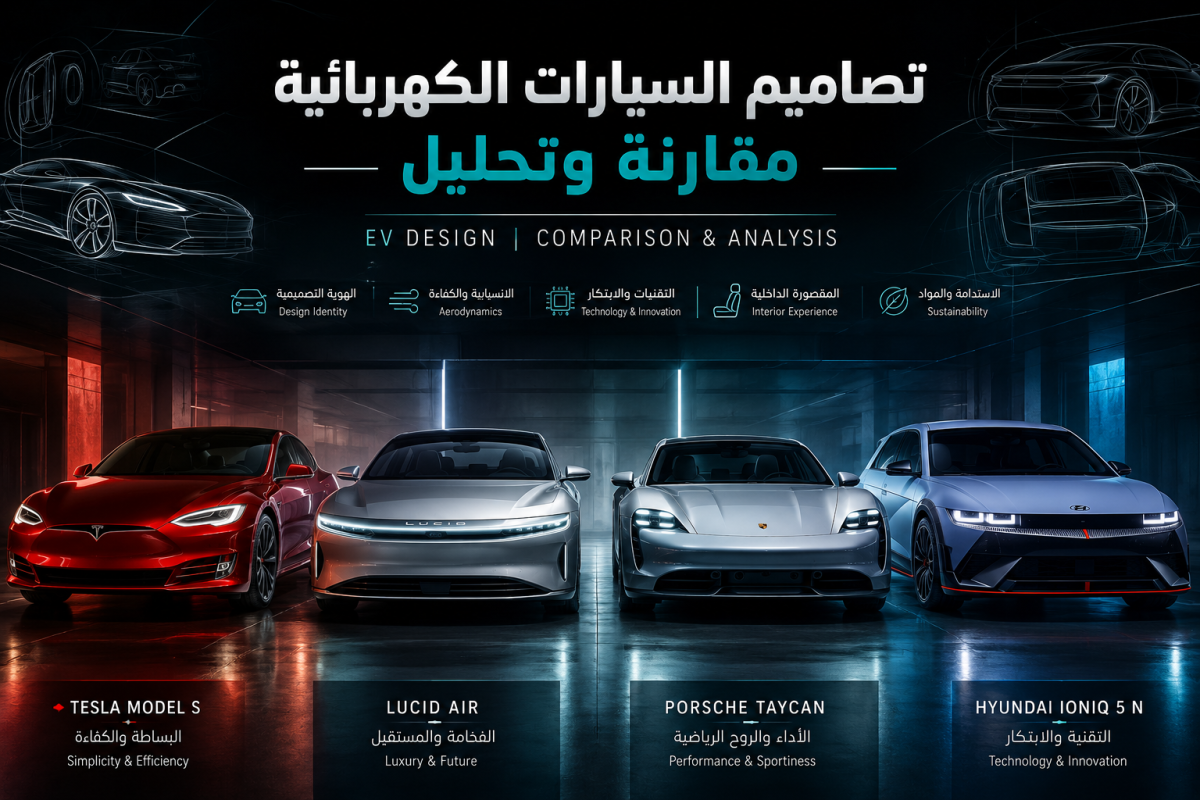
How EVs Changed Automotive Design
Electric platforms removed many traditional engineering constraints, giving designers greater freedom to rethink both exterior and interior layouts.
Modern EV design focuses on:
- Aerodynamic efficiency
- Spacious interiors
- Digital experiences
- Sustainability
- Future-oriented visual identity
Tesla
Digital Minimalism
Tesla follows a "less is more" philosophy.
Key characteristics:
- Clean front fascia
- Smooth body lines
- Minimalist interior
- Large central display
Strengths
- Excellent aerodynamic efficiency
- Timeless appearance
Weaknesses
- May feel too minimal for some users
Lucid
Luxury Meets Innovation
Lucid combines advanced technology with premium luxury.
Key characteristics:
- Expansive glass surfaces
- Premium materials
- Sophisticated lighting
- Spacious cabin design
Strengths
- Strong visual presence
- One of the most luxurious EV interiors
Weaknesses
- Premium positioning limits accessibility
Porsche Taycan
Electric Performance DNA
Porsche successfully translated its sports-car heritage into the electric era.
Key characteristics:
- Low roofline
- Wide stance
- Aggressive proportions
- Driver-focused cockpit
Strengths
- Strong sporting identity
- Authentic Porsche character
Weaknesses
- Less interior space than some competitors
Hyundai Ioniq 5 N
Retro-Futuristic Innovation
Hyundai blends futuristic technology with inspiration from classic performance cars.
Key characteristics:
- Geometric body design
- Signature pixel lighting
- Distinctive road presence
Strengths
- Unique visual identity
- Instantly recognizable design
Weaknesses
- Bold styling may not appeal to everyone
Future EV Design Trends
- Fully closed front fascias
- Full-width LED light signatures
- Smarter digital interfaces
- Sustainable materials
- Enhanced aerodynamics
- AI-powered user experiences
Conclusion
There is no single perfect EV design philosophy.
Tesla prioritizes simplicity, Lucid focuses on luxury, Porsche emphasizes performance, while Hyundai explores bold futuristic concepts.
As technology advances, EV design will continue evolving into a blend of intelligence, sustainability, and emotional appeal, making design one of the most powerful differentiators in the automotive industry.